
From Attendance Data to Pastoral Action: Building an Inclusion Intelligence Platform in a Live School
Towards the end of the autumn term, I was in a meeting with the Headteacher. As the meeting ended, she handed me a document with the challenge: “Take a look at this with your AI brain.”
The document was the school’s new Pupil Premium strategy. I read it and started thinking about how AI, data and school systems could be used more practically to support pupils who may need additional help. That was the starting point for an idea I initially called the Inclusion Framework, later the Inclusion Impact Framework, or IIF.
The most sensible and straightforward place to begin was attendance. However sophisticated our school improvement systems become, one thing remains very simple: pupils need to be in school to benefit fully from what schools provide.
Building the first version
Schools already hold huge amounts of attendance, behaviour, intervention and pupil context data. The problem is that this information often sits in separate systems, reports or spreadsheets. Pastoral teams are expected to act quickly, but the data does not always make it easy to answer the most important question: “Who needs support now?”
I started by working with data from the school’s MIS and exploring how it could be turned into something more useful for staff. The first aim was simple: identify pupils whose attendance was beginning to dip, and create a more centralised way to log and review interventions. Not another spreadsheet. A usable system.
Having previously worked on a fully integrated SharePoint site at another school, SharePoint felt like the right landing page for staff. I then began building the reporting layer in Power BI. Although Power BI was new to me at the start of the project, AI support helped me learn quickly, test ideas, troubleshoot issues and keep the build moving.
The early version of IIF included:
- Whole-school attendance views
- Year-to-date attendance
- Rolling attendance trends
- Pupil-level drillthrough
- Attendance dip measures
- Pupil Premium and SEND filters
- Operational dashboards for pastoral staff
- A SharePoint-based intervention register
- Review tracking for logged interventions
The aim was not simply to display data. The aim was to help staff move from data to action.
From dashboard to workflow
The initial build was presented to SLT around a month after the idea first emerged. After that, the Headteacher sent me a wishlist of what she wanted the platform to do next. There were 42 wishes – far more than most genies offer!
Rather than trying to build everything at once, I picked one question that felt both important and achievable: “Who has had a recent drop in attendance?”
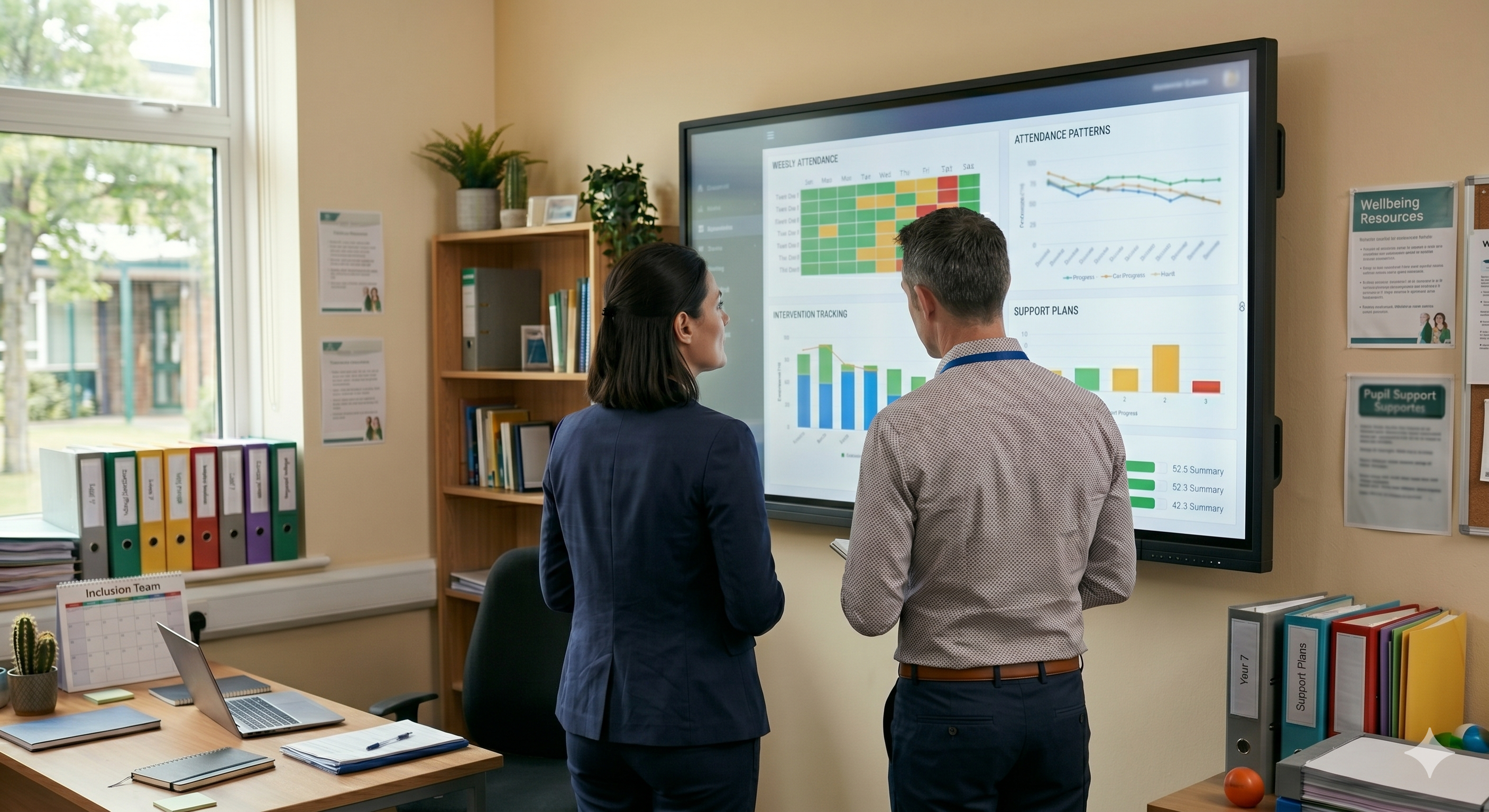
Within a few days, I had created a dashboard that answered that question. In doing so, it also began to reveal wider patterns: pupils whose attendance was drifting, groups needing closer monitoring, and cases where intervention could be logged and reviewed more consistently.
That was an important moment. It showed that the value of the platform was not just in the dashboard itself, but in how it could support pastoral workflow. Staff could begin to identify pupils more quickly, spot patterns, track interventions and use live evidence rather than relying on static spreadsheets or delayed reports.
In early use, the attendance team has already used the dashboard to identify pupils for follow-up who may otherwise have been missed. That is exactly the kind of shift I hoped IIF would support: not simply better reporting, but better visibility and earlier action.
The platform is now set to refresh twice a day, after morning and afternoon registers are completed, so staff can work from current information rather than waiting for the next manual update.
What I learned
The biggest lesson from building IIF is that the technology is only half the job. Power BI, SharePoint, MIS data and AI support are all useful tools. But the real value comes from understanding how schools actually work.
- A dashboard only helps if it answers the right questions.
- A risk score only matters if staff understand what to do next.
- An intervention log only works if it fits the habits and workload of the people expected to use it.
That is why IIF continues to grow through feedback from the people using it. Over the next few weeks, more users will have access to the platform and will begin logging interventions directly. I am working closely with pastoral and attendance staff to refine the system, add useful features and streamline workflows.
Where next?
IIF started with one document, one challenge and one question: How can we use data and AI more intelligently to support pupils who need us most? It has now become a working inclusion platform in a live school environment.
I am now exploring how this model could support other schools who want to make better use of attendance, intervention and inclusion data – not by adding more admin, but by turning existing information into clearer action.
If this is a challenge your school is thinking about, I would be very happy to have a conversation. Discuss a problem with RAISE.